
Not draining
Blocked drainage, pump faults, hose restrictions or electrical/control problems can stop water leaving the machine.
Washer diagnosis & repair
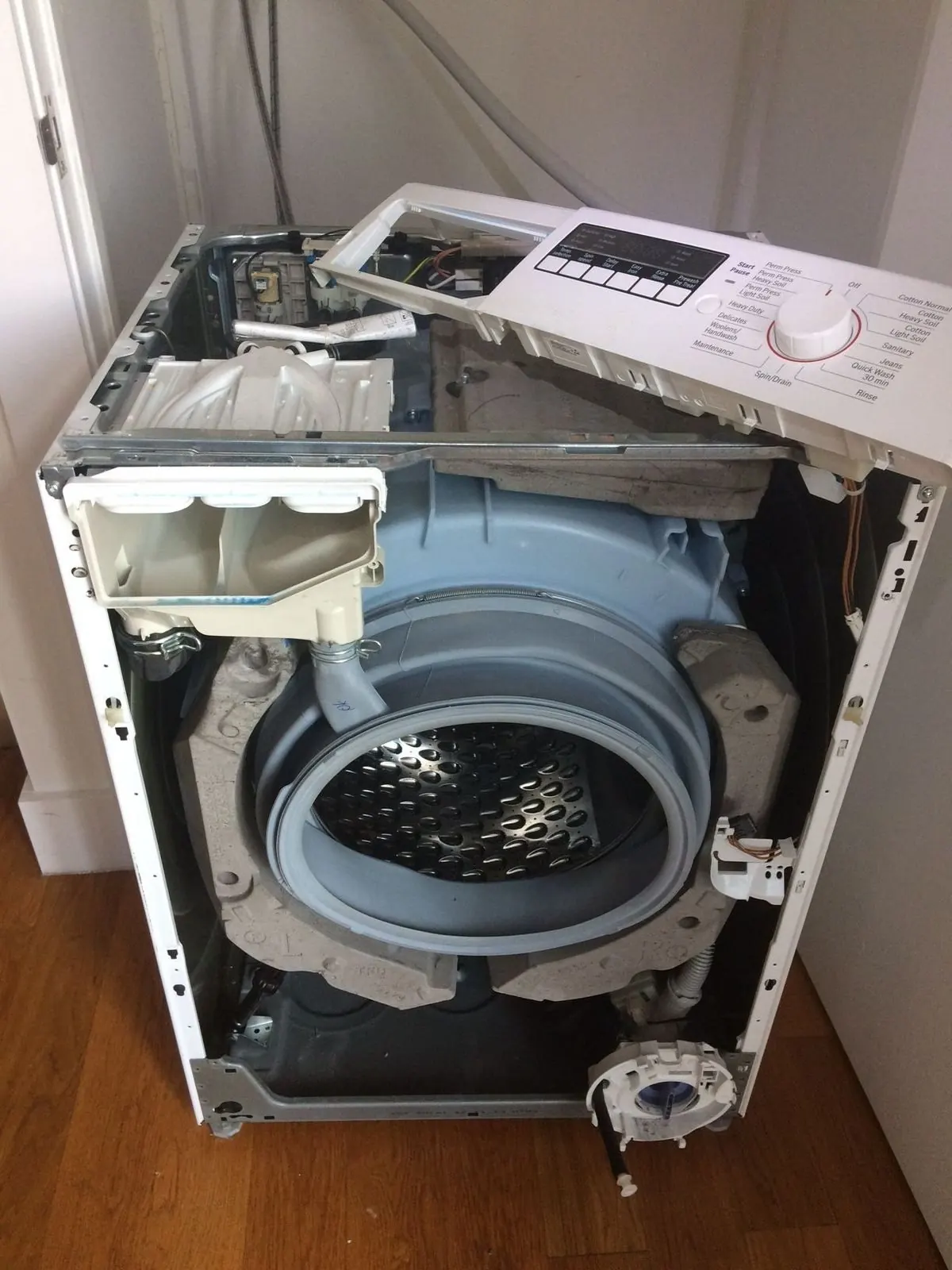
We repair washing machines across Durban for draining, spinning, filling, heating, leaking, door-lock, motor and control faults. Our technicians trace the failed stage of the cycle and repair the cause rather than replacing parts by guesswork.
Send the fault details now. We will confirm availability and the next step.
Our repair approach
We begin with the symptoms you have noticed, check the components and controls connected with the fault, then explain what needs attention. A proper diagnosis helps avoid replacing parts unnecessarily.
How repair pricing works →Professional repair service
A washing machine works through a sequence: lock, fill, wash, drain and spin. When one stage fails, the machine may stop later in the cycle even though the part that appears to be failing is not the real cause.
For example, a washer that will not spin may first need a drainage or door-lock check. A machine that will not fill may involve the water supply, inlet valve, pressure sensing or control system. The useful diagnosis follows the cycle in order.
Tell us whether the machine is a front-loader or top-loader, where the cycle stops, whether water remains inside, and any error code. That information is more useful than guessing a motor or control-board fault.
What we check
We use the symptoms to guide our checks, then confirm the cause before recommending parts or repair work.
Pump operation, filter or hose restriction and drain behaviour are checked before blaming a spin fault on the drive system.
Many machines will not advance if the door or lid lock does not report a safe condition.
Motor, belt, coupling, sensor and drum behaviour are considered when the machine has satisfied the earlier cycle conditions.
Inlet valves, water supply, pressure sensing and control signals matter when filling is slow, absent or continuous.
If the machine is leaking onto electrical connections, producing a burning smell, tripping power or making severe mechanical noise, stop using it until the fault has been assessed.
How we diagnose the problem
We check filling, drainage, door locking, drive, motor and controls according to the point where the machine stops.
We establish when the fault appears—fill, wash, drain, spin or power-up.
For example, a machine may refuse to spin because it has not drained or because the door has not locked.
Pumps, valves, locks, drive parts, wiring and controls are checked according to the symptom.
The affected function should be checked through the relevant part of the cycle.
Our repair work
We work directly on appliance components, electrical systems, cooling systems and controls, then test the repaired function before the job is complete.
Repairs we carry out
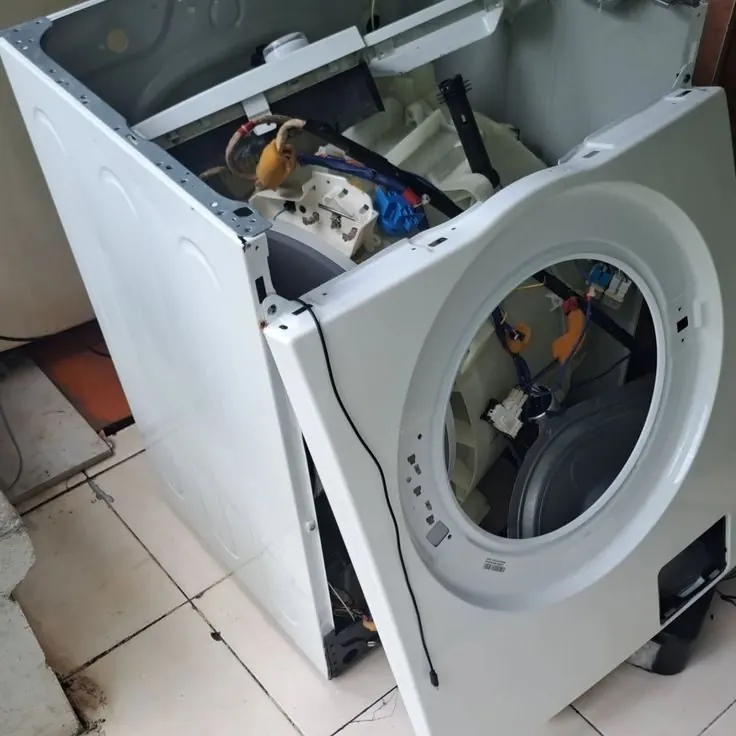
Once we identify the cause, we explain the repair, the parts involved where applicable and what the appliance needs to operate correctly again.
Common electromechanical parts can be replaced when the fault has been confirmed.
Motor, belt, suspension, bearing and drum-related issues require different levels of repair and should be assessed individually.
Door seals, hoses, pumps, dispensers and internal connections are traced according to where and when water appears.
Electronic and electrical faults are considered after the machine’s basic mechanical and water conditions are checked.
Repair prices
Typical washer repairs range from minor drainage, belt or lock work through to motor and control-board faults.
See Full Pricing GuideSymptom-led diagnosis
Tell us where the cycle stops and what the machine does immediately beforehand. We will test the systems linked to that stage.
If water remains in the drum, the machine may deliberately prevent high-speed spin. The drainage path must be checked first.
Door-lock feedback, imbalance and suspension behaviour can also interrupt or reduce spinning.
Belts, motors, sensors and control electronics become relevant when the basic conditions are satisfied but the drum still does not drive correctly.
Common questions
Answers to the questions customers commonly ask before a repair.
A machine may refuse to spin because it has not drained, the door has not locked, the load is badly unbalanced, or there is a drive, motor or control fault.
A blockage, pump problem, hose restriction or control issue can stop drainage. The drain system should be checked before forcing another cycle.
Yes, but their layouts and fault patterns differ. Tell us which type you have and the brand/model if visible.
If water is escaping unexpectedly, stop the cycle and isolate the appliance safely. Continued use can worsen water damage or expose electrical components.
Service coverage
Choose your area below, or book directly and tell us where the appliance is located.
Book Washing Machine Repair
Tell us the appliance, your location and what has gone wrong. We will confirm availability and arrange the visit.
Phone: 079976 2941